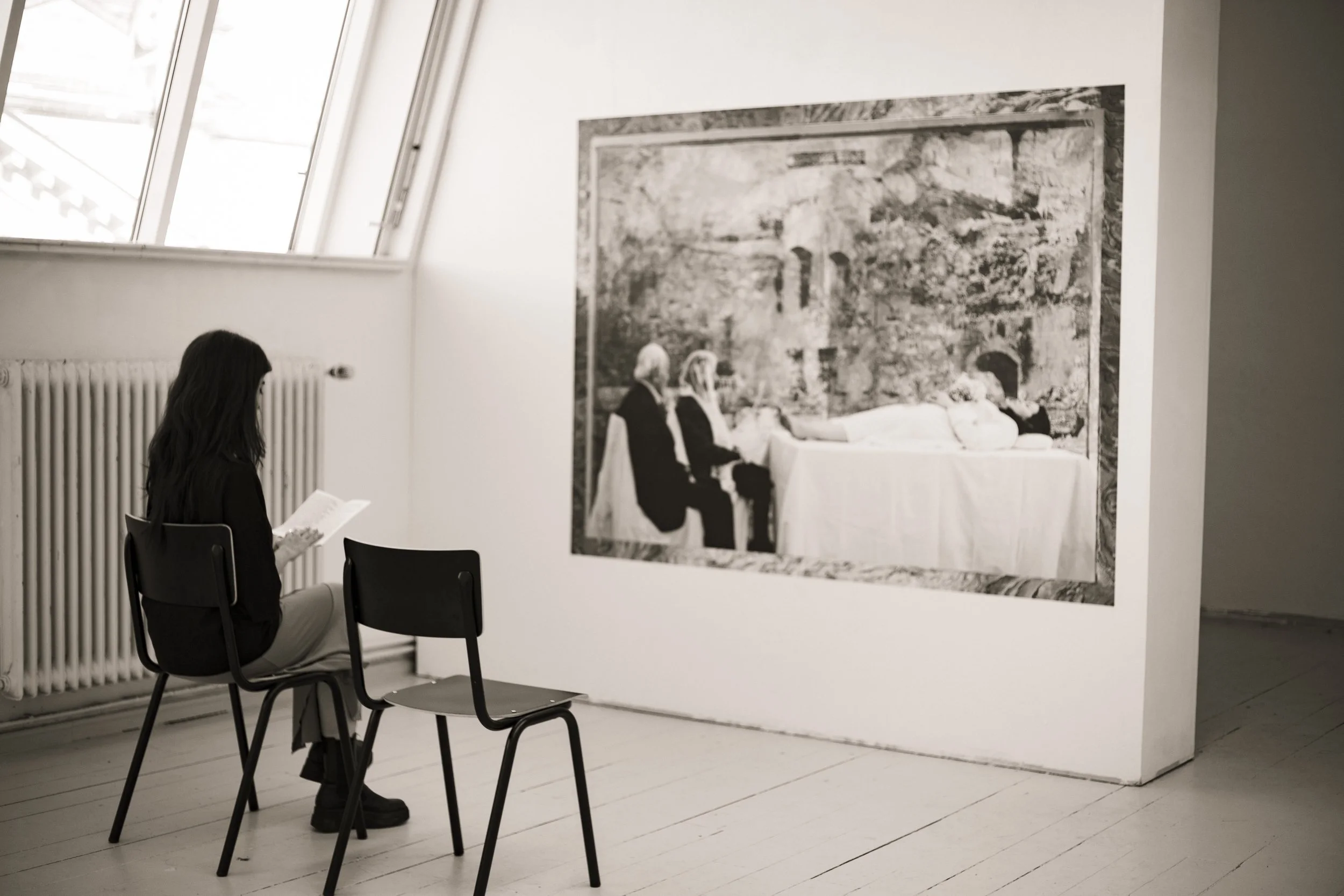
Immemorial 2025
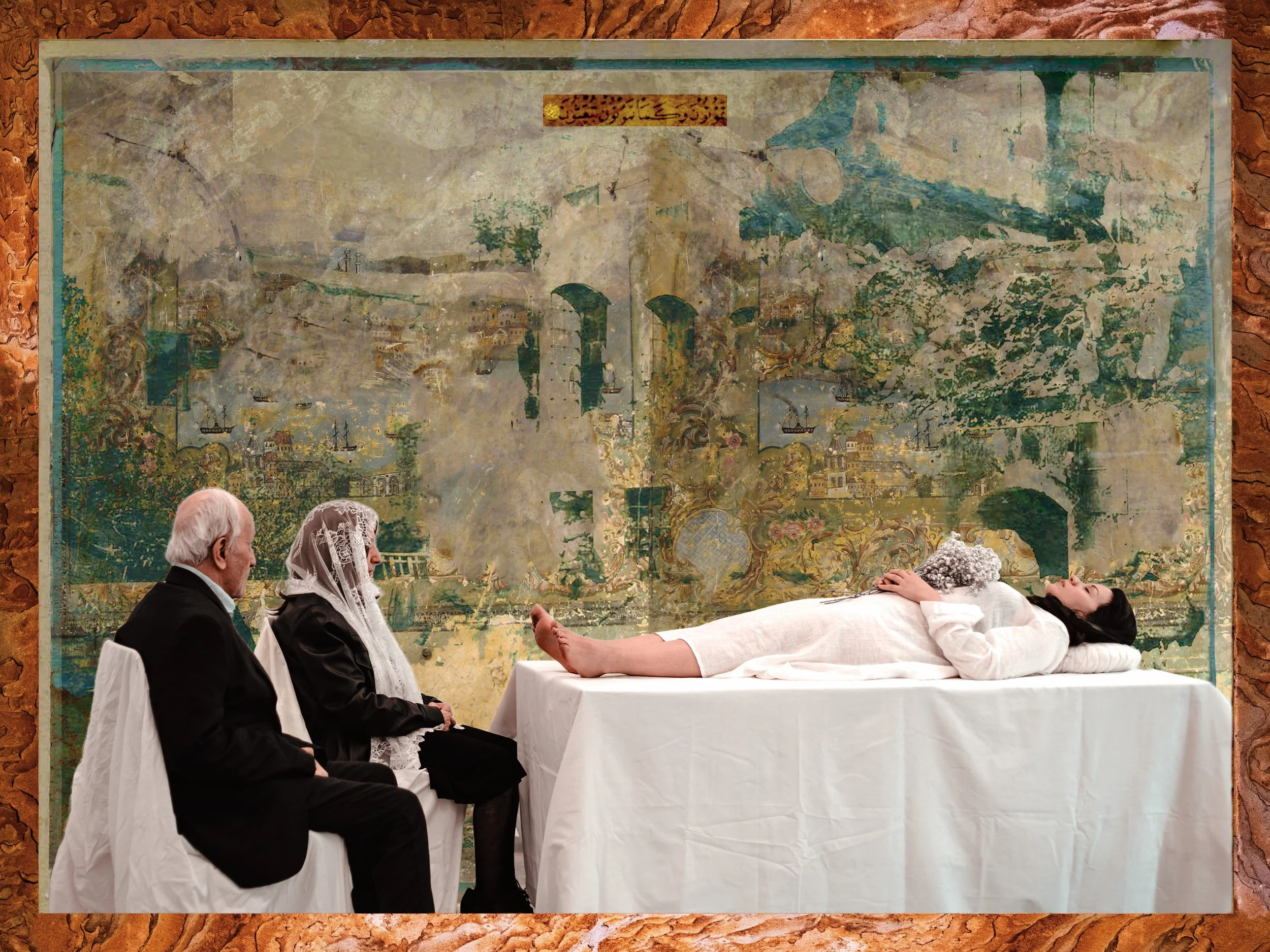
Raheel (Departure), digital collage (mixed media)
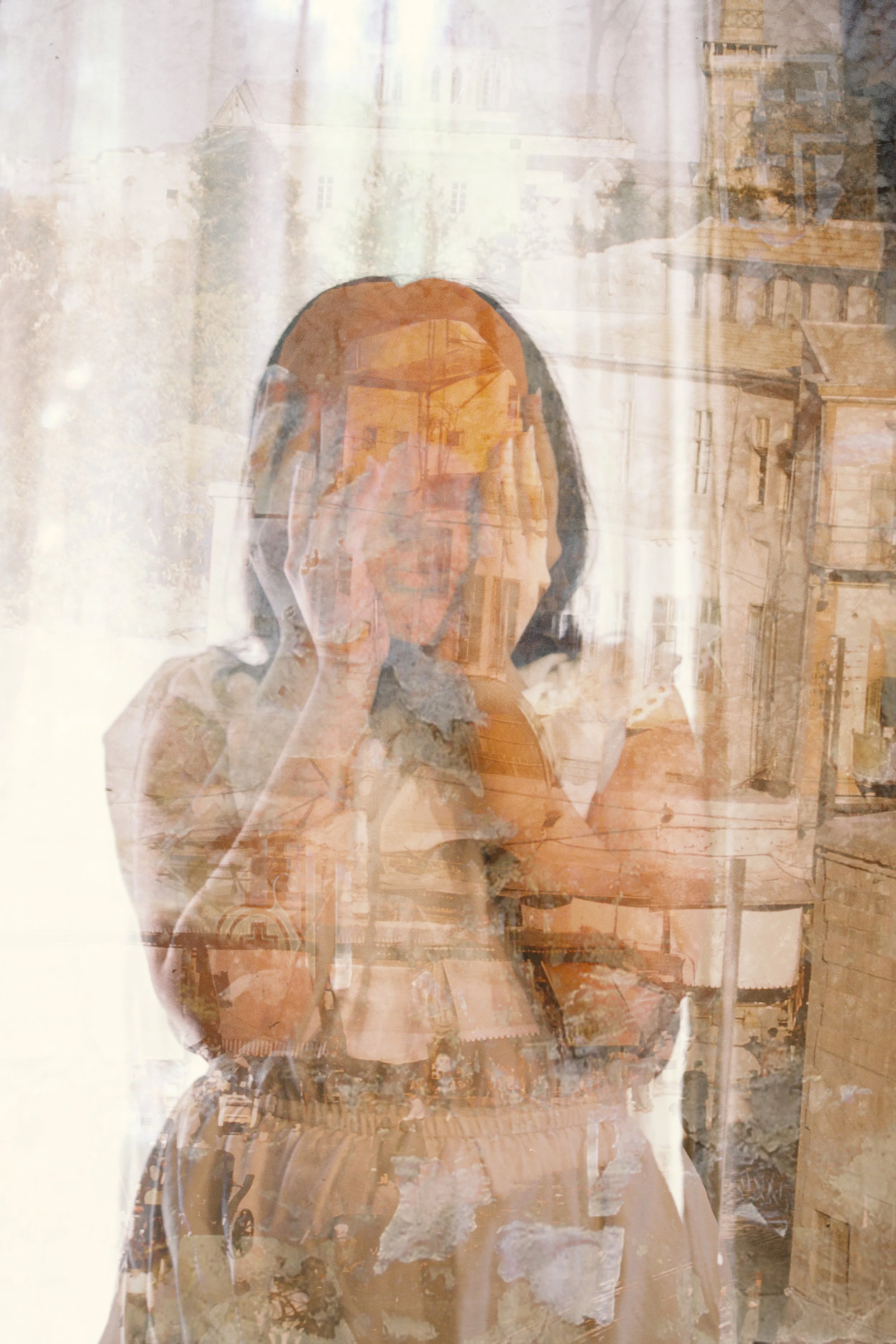
Self-portraits with a Mask, digital collage (mixed media)
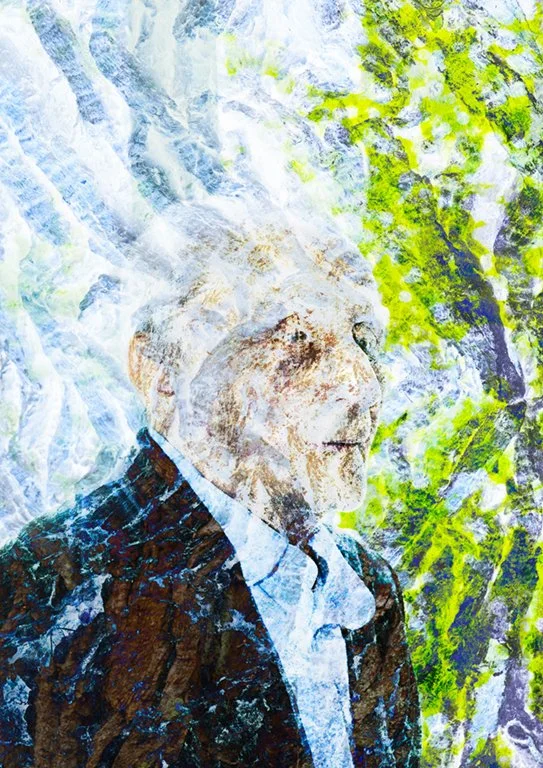
Father, digital collage (digital photography)
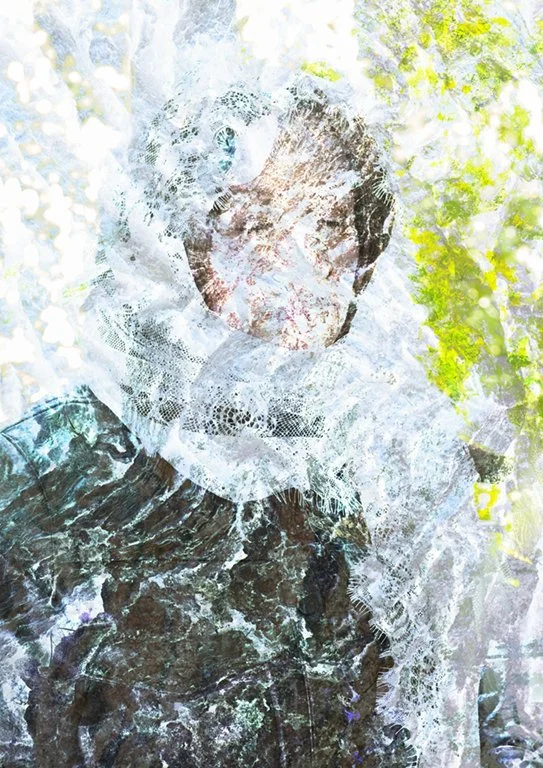
Mother, digital collage (digital photography)
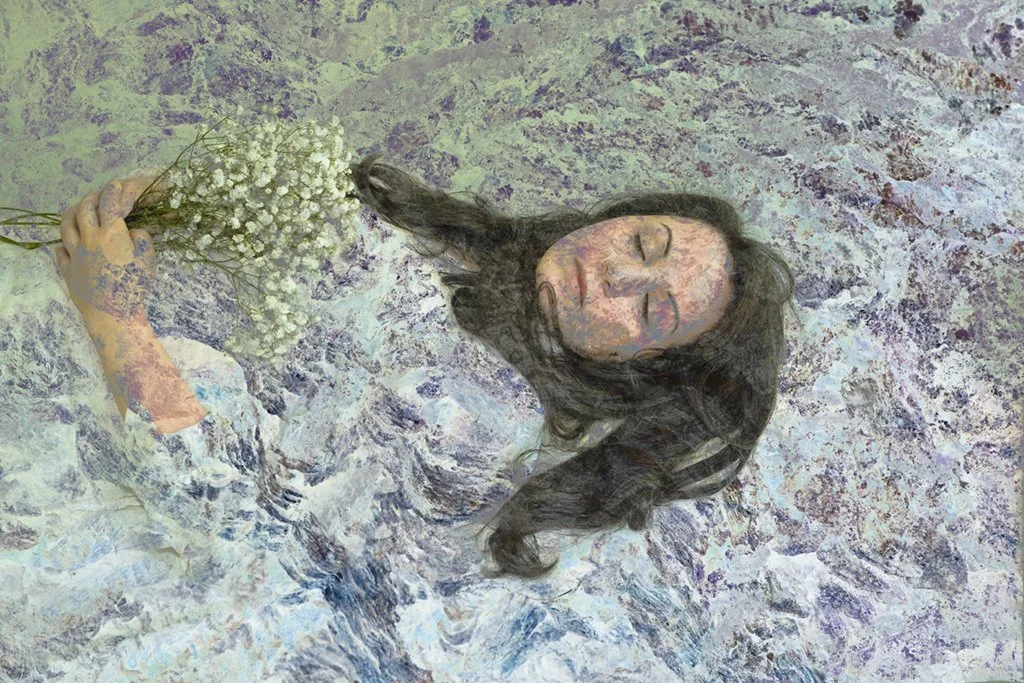
Portrait with Flowers, digital collage (digital photography)
It feels infinite: It is a feeling, a hunch, a thought that has been with me since childhood; ancient, as if it had sprung from the depths of the past, long before I could grasp my first thoughts, which makes it all the more difficult to pinpoint. In its contradictory nature, it encompasses love and fear, worry and security, loss and gain. My works are allegorical testimonies to this something, these feelings, these ideas that rob me of sleep at night and urge to be captured, delivered from the abstraction of the imagined to the abstraction of the visual creation. I use staged photography to test my feelings, to give a corporeal presence to the cerebral. I start with the vestiges of an image floating in the fog of my mind, I try to piece the feelings together as one vigorously tries to recover a distant memory. I create a prototype and try to calibrate the details till I reach a possible depiction of the melange of feelings that I have.
When trying to visualise one’s own interior life, the artist is forced to work in layers of meaning. It is not as straightforward as photographing a building or a busy street crossing. Freud described our psyche as conflicted, layered, and largely unconscious, a dynamic product of internal drives, social pressures, and early experiences. The unconscious part of our mind holds on to thoughts, memories, desires, and impulses that we often try to repress or forget. These repressed elements of mental life are not erased but remain active, influencing behaviour, emotions, and even bodily symptoms. One of the primary ways the unconscious material makes its presence felt is through defence mechanisms, mental strategies used by the ego to manage internal conflict and anxiety. The artistic action of staging a scene can be used in this sense as a mechanism to deal with such consternation and mental disquiet. By externalising the inner thoughts, the artist is able to reflect on them and create a visual dialogue, negotiating the narrative of such scenes by manipulating their different aspects, point of views, and the roles played by the participants.
Photography is a tool for recreating time. Afterall, a picture is not just a moment frozen in time printed and framed, but rather an anecdote, a chapter that tells a story, answers questions, and create or solve mysteries. The capability of photography to transform the subjective state into an objective one, while allowing the observer to perceive yet again the subjective in that objective scene, is what makes this medium dialectic, and more flexible on the semiotic level than other forms of artistic expressions.
There is a multifaceted impression in every photo. I might, as the creator of the image, be concerned with highlighting one of them, while leaving the other potential impressions for the viewer to discern, deduce or ignore altogether. I enjoy compiling such impressions. I do this sometime by simply keeping the picture open for interpretation or by resorting to the method of collaging different pictures together.
In a collage, pictures become textures, and they melt into one another. A building, a heap of rocks, see weed, they all create edges on the surface of the smooth portrait, adding dimensions, shadows and lines. A picture is subsequently transformed into a collage of images due to this layering, where the subject is transformed from the one to the many and the time stamp of the picture becomes harder to discern as the moment itself becomes more fluid.
I observe that in the recent years, I have become obsessed with autobiographical and familial centred themes. I realise that the shared trauma that my family and me went through due to the war in Syria had caused us to become closer and more tightly knit than ever before. Trauma creates a hole in memory, a breakage in the continuity of time and biography. I use my art to fill the gaps in the narrative. The physical dimensions of the identity, such as place and time, are also negotiated and re-examined. The city becomes part of the self-portrait, just as it is part of my identity. The city is personified in my pictures, and it is part of my family portraits.
I also reflect on the feelings of loss in this context, living in exile, had turned me into a compulsory nomad. No place is home, because home doesn’t exist anymore, not in the way I remember it anyway. In my collage, “Raheel”, I examine the fear of losing my parents. A very common fear amongst children, it got amplified after the break of the war and the uncertainty of survival. Set against the backdrop of destroyed landscapes from Damascus, I add the weight of losing my hometown to the funeral scene. The city becomes another beloved that is lost and being mourned. Similarly, in the second collage, “Portrait with a Mask”, the body of the city becomes one with mine. The shifting nature of identity is similar to that of the mask; it is not fixed.